The checkout price is not the ownership cost
Adobe regularly markets introductory discounts for first-time Creative Cloud subscribers. The offer can be attractive, especially for someone who needs several professional apps immediately. The mistake is treating the first displayed monthly amount as the long-term price.
Creative subscriptions should be compared over at least 24 months because the renewal often arrives after the buyer’s files, presets and habits are deeply embedded in the suite.
Calculate three totals
Write down the promotional period, the regular monthly rate and any early-cancellation terms tied to an annual commitment. Then calculate the first year, the second year and the average monthly cost across both years.
For students and teachers, Adobe’s current US offer lists $19.99 a month for the first year and $39.99 after that. The second figure—not the headline discount—should be the starting point for a sustainable budget.
Count the apps you really use
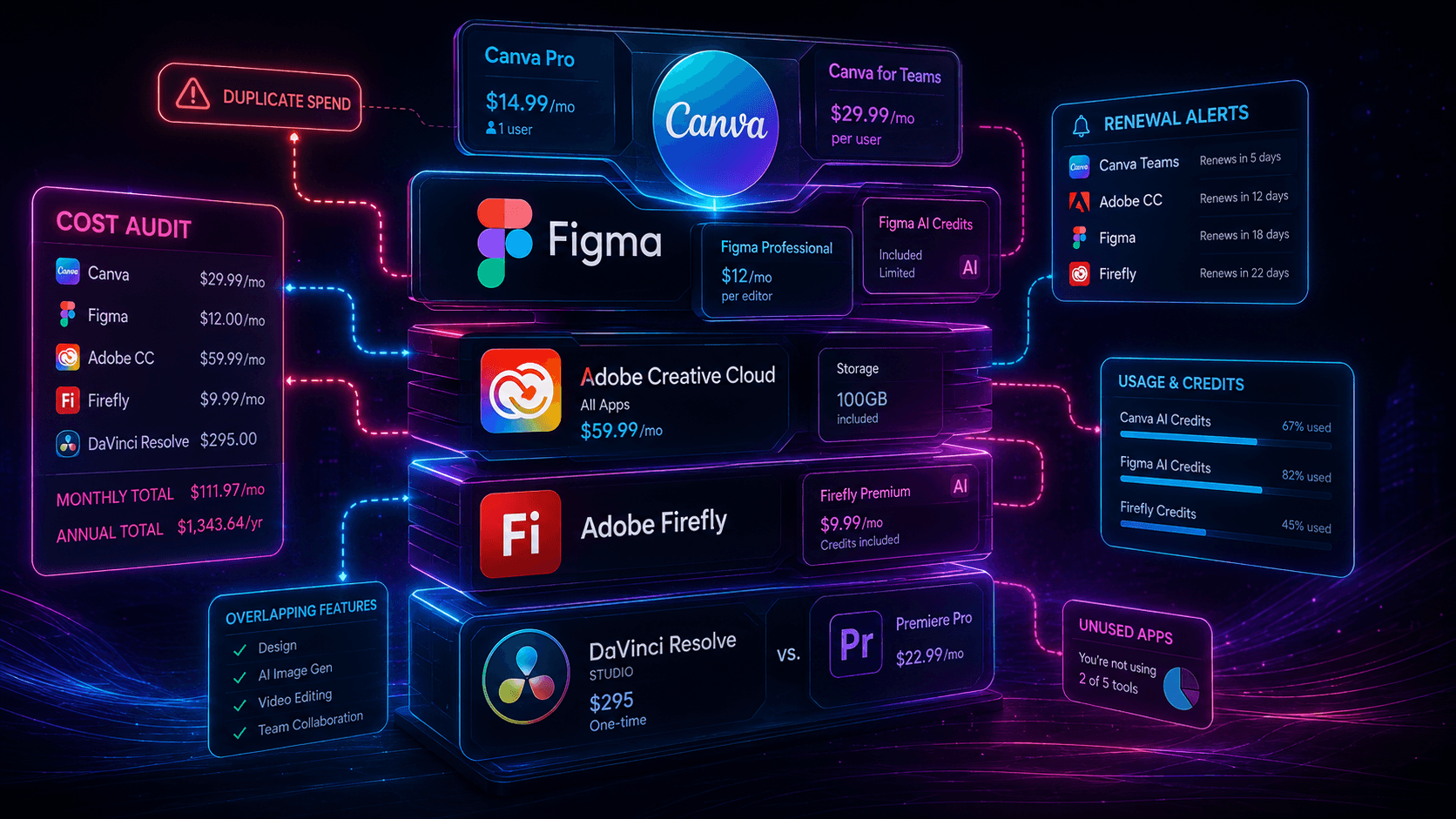
Creative Cloud Pro can make excellent financial sense for someone using Photoshop, Illustrator, Premiere, Acrobat and other included apps. It is much harder to justify when one application carries the whole subscription.
Review app usage before renewal. A single-app plan, a photography plan or a different tool may be cheaper, although each option has its own generative-credit and storage limits.
Plan the exit before the renewal
Export critical assets in standard formats, document fonts and plugins, and understand what happens to cloud files if the plan changes. This is not preparation to leave Adobe immediately; it is protection against being unable to evaluate alternatives.
Set a reminder at least 30 days before the promotional period ends. Renewal decisions made after the charge appears are rarely thoughtful.
ScoutSubs verdict
An introductory discount is valuable when it finances a real period of paid creative work. Judge the plan on the second-year price and the number of core apps used every month. Buy the suite for a workflow, not because the first-year percentage looks dramatic.